
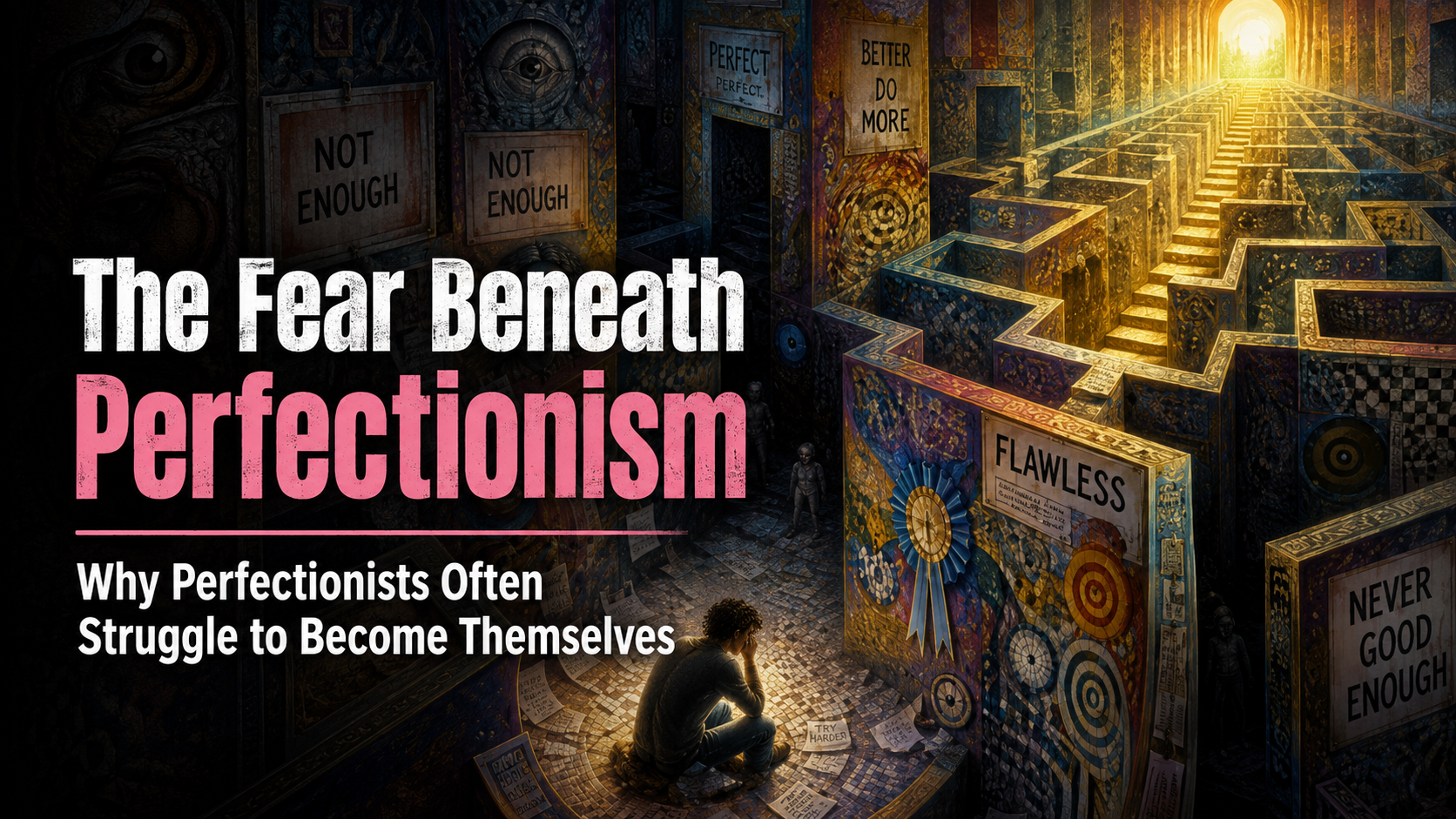
Perfectionism is often mistaken for a strength. It can look like ambition, discipline, and high standards. People who strive for perfection are frequently praised for their work ethic and reliability. Yet beneath the polished exterior, many perfectionists carry something far less admirable: fear.
Not the fear of failure alone, but the fear of being seen as they truly are.
This hidden fear can quietly shape careers, relationships, creativity, and even personal identity. The more someone chases perfection, the further they may drift from becoming the person they were meant to be.
Perfectionism Is More Than Wanting to Do Well
There is nothing wrong with aiming for excellence. Wanting to produce quality work or improve your skills is healthy and rewarding.
Perfectionism, however, operates differently.
Instead of asking, “How can I do my best?”, it asks, “How can I avoid making any mistakes?”
That subtle shift changes everything.
Life becomes less about growth and more about self-protection. Every decision is filtered through the possibility of criticism, rejection, or failure.
The result is often paralysis rather than progress.
The Hidden Fear Behind the Perfect Image
Many perfectionists spend years constructing an image that feels safe.
They become dependable employee.
The flawless student.
The perfect parent.
The person who always appears to have everything under control.
Yet maintaining this image requires constant effort. There is little room for vulnerability because mistakes feel like threats to identity rather than opportunities to learn.
This is where perfectionism becomes exhausting. Instead of revealing who you are, you begin performing who you think you should be.
Why Perfectionism Can Prevent Authenticity
Authenticity requires risk.
It means expressing opinions that others may disagree with.
Trying something you might fail at.
Showing emotions that cannot be neatly managed.
Perfectionism resists all of these.
Rather than exploring genuine interests, perfectionists often choose what feels safest. They may pursue careers that earn approval instead of fulfilment, avoid relationships where vulnerability is required, or abandon creative projects before anyone can judge them.
Ironically, the pursuit of perfection often prevents genuine self-discovery.
If every action is carefully controlled, there is little space to discover who you really are beneath the performance.
The Cost of Living Behind the Mask
At first, perfectionism can appear successful.
Deadlines are met.
Goals are achieved.
Praise is received.
But internally, something feels missing.
Many perfectionists experience chronic anxiety, imposter syndrome, burnout, and an ongoing sense that they are never quite enough.
No achievement feels satisfying because the standard simply moves higher.
Instead of enjoying success, they immediately search for the next flaw to correct.
Over time, this cycle becomes emotionally draining.
Becoming Yourself Requires Imperfection
Personal growth has never depended on perfection.
It depends on honesty.
You cannot discover your strengths without exposing your weaknesses.
You cannot build meaningful relationships without allowing people to see the real you.
You cannot develop courage without facing uncertainty.
The people who appear most authentic are rarely those who never make mistakes. They are the people who no longer believe mistakes define their worth.
That shift is deeply liberating.
Letting Go of the Fear
Breaking free from perfectionism is not about lowering your standards.
It is about changing what your standards are built upon.
Instead of measuring yourself by flawless performance, measure yourself by honesty, resilience, curiosity, and compassion.
Ask yourself:
- Am I making this choice because it reflects who I truly am?
- Or am I making it because I fear disappointing someone else?
- What would I attempt if I believed my value did not depend upon getting everything right?
These questions often reveal that perfectionism has been protecting a fragile sense of self for far longer than we realised.
A Deeper Perspective on the Self
The struggle beneath perfectionism is ultimately a struggle with identity.
It is not simply about productivity or achievement.
It is about becoming comfortable with being fully yourself, even when that self is imperfect.
Few thinkers explored this inner conflict as profoundly as Søren Kierkegaard. His insights into anxiety, despair, identity, and the human condition remain remarkably relevant today.
If these ideas resonate with you, The Sickness Unto Death: A Modern Translation for the 21st Century offers an accessible and engaging way to explore one of philosophy’s most influential works. It brings Kierkegaard’s timeless reflections into contemporary language, making his exploration of the self far easier for modern readers to understand.
To learn more or order your copy, visit www.thesicknessuntodeath.com.
Final Thoughts
Perfectionism promises safety, but it often delivers distance—from other people and from ourselves.
The courage to become yourself begins when you stop trying to become perfect.
You do not discover your identity by avoiding every flaw.
You discover it by living honestly, embracing growth, and recognising that your worth has never depended upon flawless performance.
Perhaps the greatest achievement is not becoming perfect after all.
Perhaps it is finally becoming real.